Silhouette Figures Conversation Teaching: A Practical Guide for Visual Storytelling
In the realm of graphic design and visual communication, the choice of illustration style often dictates how a message is received. Among the various options available, Silhouette Figures Conversation Teaching has emerged as a distinct and versatile approach. This style utilizes high-contrast black shapes against a clean white background to depict human interaction, specifically focusing on scenarios involving education, mentorship, and professional dialogue. For designers, educators, and business professionals aged 20 to 50 who are evaluating resources for presentations, marketing materials, or educational content, understanding the nuances of this style is essential for making informed decisions.
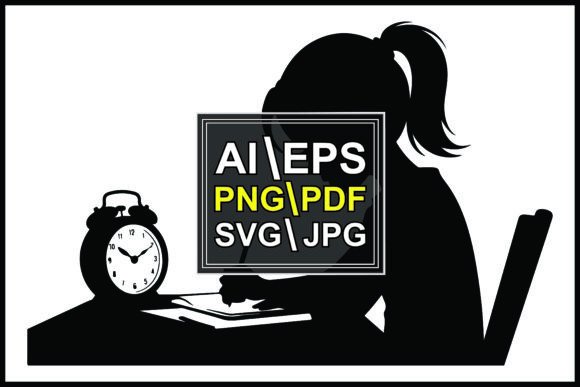
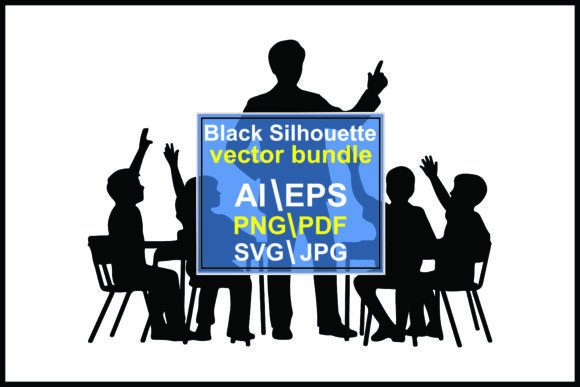
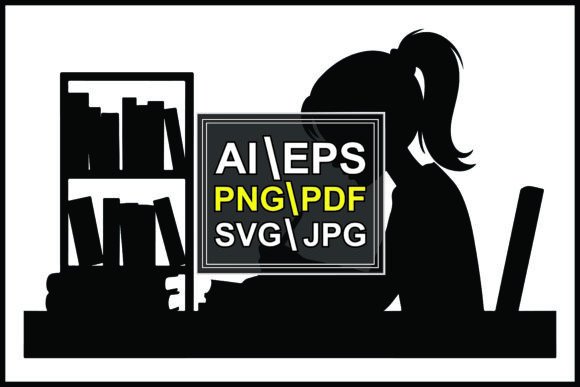
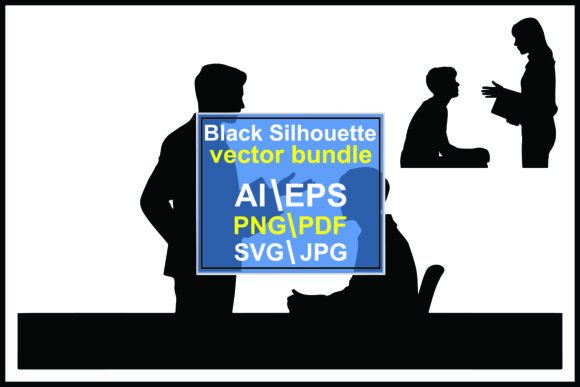
The core appeal of silhouette figures lies in their abstraction. By removing facial features, clothing details, and specific ethnic markers, these illustrations focus entirely on body language, posture, and spatial relationships. When applied to conversation and teaching poses, the result is a universal visual language that transcends cultural barriers. A figure standing behind a desk gesturing toward a seated student, or two individuals leaning over a table in discussion, communicates the essence of the interaction without getting bogged down in unnecessary detail. This makes Silhouette Figures Conversation Teaching particularly effective for conveying concepts like strategy planning, coaching, and knowledge transfer.
Defining the Distinctive Qualities of Silhouette Illustrations
What sets Silhouette Figures Conversation Teaching apart from other illustration styles is its commitment to clarity and minimalism. In a crowded digital landscape where audiences are bombarded with hyper-realistic photography and complex vector art, silhouettes offer a moment of visual rest. The stark contrast between the black figures and the white background ensures that the subject matter remains the focal point. This is especially true when depicting complex group dynamics, such as a team meeting or a classroom setting.
Unlike realistic portraits that require careful rendering of skin tones, hair textures, and fabric folds, silhouettes rely on the integrity of the outline. This simplification allows for faster recognition by the viewer's brain. When you see a teacher pointing at a board or a manager guiding an employee, the action is immediately understood. The absence of distracting details forces the viewer to interpret the scene based on context and posture, which can actually enhance engagement by inviting the audience to project their own experiences onto the image.
Furthermore, the versatility of this style extends to its adaptability across different mediums. Whether used in a printed brochure, a slide deck, or a website banner, the binary nature of black and white ensures consistency. There are no issues with color shifting or resolution loss when scaling, provided the source files are of sufficient quality. This reliability is a significant factor for professionals who need assets that perform well in both print and digital environments.
Comparing Silhouettes with Realistic and Flat Vector Styles
When selecting visual assets, it is crucial to compare Silhouette Figures Conversation Teaching with alternative styles such as realistic photography, flat vector art, and detailed line drawings. Each option serves a different purpose and carries its own set of tradeoffs.
- Realistic Photography: Photographs offer authenticity and emotional depth through facial expressions. However, they can be expensive to license, difficult to edit, and may inadvertently introduce bias regarding age, race, or gender. Silhouettes eliminate these concerns, offering a neutral representation that is inclusive by design.
- Flat Vector Art: Flat illustrations use solid colors and simplified shapes but often retain some level of detail, such as eyes or colored clothing. While vibrant and modern, they can sometimes feel too stylized for serious corporate or academic contexts. Silhouettes provide a more timeless and formal aesthetic that aligns well with themes of authority and learning.
- Detailed Line Drawings: These sketches offer a hand-drawn, organic feel. They are excellent for creative industries but may lack the bold impact required for large-scale presentations or signage. Silhouettes, with their solid mass, command attention more effectively from a distance.
The decision often comes down to the desired tone. If the goal is to evoke a specific emotion through a smile or a frown, photography or detailed illustration is superior. However, if the objective is to represent a concept—such as "collaboration," "mentorship," or "strategy"—silhouettes are often the more efficient choice. They strip away the noise, leaving only the fundamental structure of the interaction.
Evaluating Technical Formats and Workflow Efficiency
A critical aspect of choosing visual resources is the technical flexibility they offer. High-quality Silhouette Figures Conversation Teaching bundles typically come in multiple file formats to accommodate various software environments. Understanding these formats is vital for ensuring a smooth workflow.
Most comprehensive collections include JPG and PNG files for immediate use in web projects and basic document editing. PNG files, in particular, are valuable because they support transparency, allowing the black figures to be placed over any background color without a white box surrounding them. However, for professional design work, vector formats are indispensable.
Formats such as AI (Adobe Illustrator), EPS, and SVG allow for infinite scalability. You can resize a silhouette figure from a small icon to a billboard-sized poster without any loss of quality. Additionally, vector files enable designers to modify the artwork directly. You might want to change the pose slightly, adjust the angle of a hand, or combine multiple figures into a new composition. Having access to these editable layers significantly increases the value of the asset.
For those working with PDF workflows or needing a universal standard, PDF versions are also commonly included. A robust bundle will compress all these types into a single ZIP file. To access these resources, users simply need to extract the archive using tools like WinZip, WinRAR, or the built-in extraction utilities found in most operating systems. This organization ensures that all necessary files are kept together, preventing version control issues and streamlining the retrieval process for future projects.
When Silhouettes Are the Right Choice
Silhouette Figures Conversation Teaching is the optimal choice in several specific scenarios. First, it is ideal for corporate communications where neutrality and professionalism are paramount. In annual reports, training manuals, or strategic planning documents, the understated elegance of silhouettes conveys seriousness without being intimidating.
Second, this style excels in educational materials. Textbooks, online courses, and instructional guides benefit from images that do not distract from the text. A silhouette of a teacher explaining a concept to a student provides a clear visual anchor without competing for attention. Similarly, in business contexts involving interviews, coaching, or partnership discussions, the focus should remain on the exchange of ideas rather than the appearance of the participants.
Finally, silhouettes are perfect for branding that requires a consistent, minimalist identity. Because they are devoid of trend-specific details, they tend to age better than colorful, stylized illustrations that may look dated in a few years.
Limitations and Alternative Considerations
Despite their strengths, silhouettes are not a one-size-fits-all solution. Their primary limitation is the inability to convey subtle emotions. If your narrative relies heavily on the nuance of a facial expression—a raised eyebrow indicating skepticism or a warm smile showing empathy—silhouettes will fall short. In such cases, illustrated characters with defined features or stock photography would be more appropriate.
Additionally, while silhouettes are excellent for general concepts, they may lack the specificity needed for highly detailed technical diagrams. If the position of hands or the exact angle of a tool is critical to the instruction, a more detailed line drawing or photograph is necessary. Designers must weigh the need for universality against the need for precision.
Making an Informed Decision for Your Projects
Selecting the right visual assets involves balancing aesthetic goals, technical requirements, and budget constraints. Silhouette Figures Conversation Teaching offers a compelling middle ground for many professionals. It provides the versatility of vector graphics, the inclusivity of abstract forms, and the timeless appeal of black-and-white design. By understanding the strengths of this style compared to realistic and flat alternatives, you can make a confident choice that enhances your communication strategy.
Whether you are designing a presentation on teamwork, creating educational content for students, or developing marketing materials for a consulting firm, the ability to visualize human interaction clearly is invaluable. With a diverse collection of formats including JPG, PNG, AI, EPS, SVG, and PDF, bundled efficiently for easy extraction, these resources empower creators to bring their ideas to life with clarity and impact. Ultimately, the best choice depends on your specific narrative needs, but for conveying the essence of conversation, teaching, and collaboration, silhouettes remain a powerful and practical tool.