Strategic Application of the Autism Awareness SVG for Brand and Community Impact
In the landscape of digital design and print-on-demand entrepreneurship, the selection of assets is rarely just an aesthetic choice; it is a strategic decision that defines brand positioning and community engagement. The Autism Awareness SVG represents more than a collection of vector graphics; it serves as a comprehensive toolkit for creators aiming to communicate complex messages of acceptance, advocacy, and neurodiversity with clarity and precision. For professionals ranging from small business owners to educators, leveraging this specific 9-panel design offers a structured approach to visual storytelling that aligns with the values of the autistic community while meeting high operational standards.
The core value of this resource lies in its versatility and resolution. Unlike low-fidelity clip art that degrades upon scaling, this high-resolution asset pack delivers crisp, clean prints at 300 DPI. This technical specification is critical for entrepreneurs who require professional-grade output across diverse mediums. Whether the goal is to produce durable apparel for a fundraising event or detailed classroom posters for educational institutions, the fidelity of the file ensures that the final product maintains integrity. The inclusion of multiple formats—SVG, PNG, EPS, PDF, and DXF—further expands the operational scope, ensuring compatibility with industry-standard cutting machines like Cricut and Silhouette, as well as professional laser cutters such as Glowforge.
Aligning Visual Assets with Strategic Goals
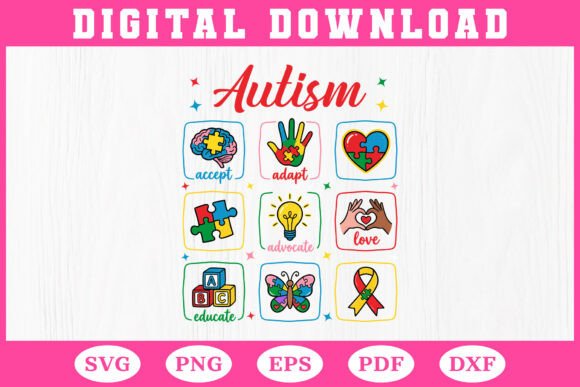
Before integrating any graphic into a business model or educational plan, one must define the intended outcome. The Autism Awareness SVG is particularly effective when the objective is to foster a sense of belonging and visibility. The design features nine distinct mini-illustrations, each representing a pillar of the neurodiversity movement: Accept, Adapt, Love, Advocate, Educate, and others. These are not random symbols; they are semantic anchors that guide the viewer's understanding of the message.
For a small business owner planning a product line for April, which is globally recognized as Autism Awareness Month, these symbols provide a narrative framework. Instead of relying on generic imagery, the use of the puzzle heart, the butterfly, and the advocate lightbulb allows for a nuanced communication strategy. The puzzle heart, historically significant in autism iconography, speaks to the complexity and interconnectedness of the condition. The butterfly symbolizes transformation and the unique journey of growth, while the lightbulb represents the innovative thinking often found within the autistic community. By selecting specific panels from this 9-panel set, creators can tailor their messaging to resonate with specific sub-audiences, such as parents seeking support or advocates pushing for policy change.
Strategic deployment also involves timing and context. Releasing products featuring these designs during key awareness periods maximizes visibility and potential impact. However, the utility extends beyond seasonal marketing. In an educational setting, these visuals serve as permanent fixtures that normalize neurodiversity year-round. A teacher utilizing the "Educate" panel for a classroom poster is making a long-term investment in student culture, signaling that diversity is a foundational value rather than a temporary topic.
Operational Efficiency in Custom Production
From an operations perspective, the availability of vector formats significantly reduces production friction. When managing a workflow that involves custom T-shirts, tote bags, or stickers, the ability to scale graphics without loss of quality is paramount. The Autism Awareness SVG eliminates the need for time-consuming image upscaling or redrawing, allowing creators to focus on material selection, color theory, and distribution logistics.
Consider the workflow for a freelancer creating personalized gifts for Autism Moms and Dads. The process begins with the selection of the appropriate format based on the output device. An SVG file is ideal for vinyl cutting machines used to create intricate decals for mugs or laptops. Conversely, the EPS or PDF versions are better suited for professional printing services that require vector data for large-format signage or high-quality fabric transfers. This flexibility streamlines the production pipeline, reducing errors and turnaround times. It allows the creator to pivot quickly between different product types—moving from a batch of t-shirts for a walkathon to a set of planner stickers for a school fundraiser—without needing to source new assets.
Furthermore, the cohesive nature of the 9-panel design ensures brand consistency. If a business creates a series of products using different panels from the same set, the visual language remains unified. This consistency builds trust with the consumer, reinforcing the perception of a thoughtful, intentional brand rather than a disjointed collection of items. In the competitive marketplace of awareness merchandise, this level of cohesion can be a decisive factor in customer retention and loyalty.
Navigating Risks and Ensuring Authentic Engagement
While the Autism Awareness SVG offers significant advantages, its use requires careful consideration to avoid pitfalls associated with superficial engagement. One of the primary risks in the awareness economy is the commodification of identity without genuine support. Using these symbols merely to capitalize on a trend, without understanding the underlying message of acceptance and advocacy, can lead to reputational damage and alienation of the very community the brand aims to support.
To mitigate this risk, creators must approach the design with intentionality. This means researching the history and meaning behind each symbol before application. For instance, while the puzzle piece has been a staple of autism imagery, some members of the community prefer the infinity loop or other symbols that emphasize neurodiversity over "solving" a puzzle. The inclusion of the "Advocate" and "Accept" panels in this specific design acknowledges the evolving conversation around self-advocacy. Creators should prioritize these elements if their goal is to align with modern, community-led movements.
Another consideration is the context of placement. A design that works well on a supportive classroom wall may not translate effectively to a casual fashion item if the tone is mismatched. Decision-makers should ask: Does this application respect the dignity of the subject? Does it contribute to education or simply decorate? The answer to these questions determines whether the project adds value or noise. Strategic planning involves mapping out how the visual will be received by the target audience and ensuring that the accompanying copy or mission statement reinforces the positive intent of the imagery.
Long-Term Value and Community Building
The true measure of success for any initiative involving the Autism Awareness SVG is its long-term impact on the community. Short-term sales spikes are less valuable than sustained engagement and education. When educators use these designs to create inclusive environments, they are laying the groundwork for social-emotional learning that benefits all students. When businesses use them to fundraise for reputable organizations, they are converting consumer interest into tangible resources for research and support services.
Creators can maximize this value by integrating the designs into broader campaigns. For example, a series of blog posts explaining the significance of each of the nine panels can accompany the sale of physical products. This approach transforms a simple transaction into an educational opportunity, enhancing the E-E-A-T (Experience, Expertise, Authoritativeness, Trustworthiness) profile of the content. It positions the creator not just as a seller of goods, but as a knowledgeable partner in the cause.
Ultimately, the decision to utilize the Autism Awareness SVG should be driven by a clear vision of what the creator hopes to achieve. Whether the goal is to raise funds for a local charity, equip a classroom with inclusive materials, or express personal solidarity, the tool provides the necessary visual vocabulary. By combining high-quality technical specifications with a thoughtful, strategic approach to messaging, creators can ensure their work resonates authentically and contributes meaningfully to the ongoing dialogue about autism acceptance and advocacy.