Happy School Boy Holding Pencil and Book: A Practical Asset for Educational Design Workflows
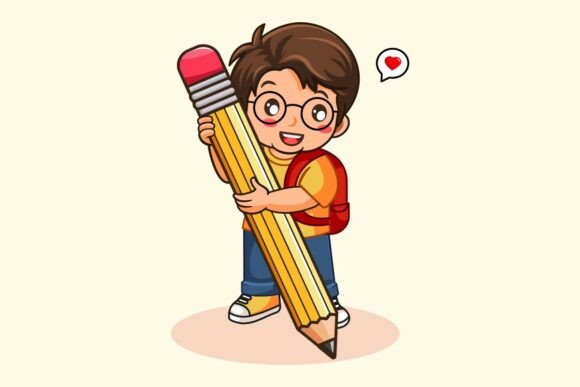
In the landscape of digital content creation, visual assets serve as more than mere decoration; they are functional tools that communicate tone, context, and intent instantly. The Happy School Boy Holding Pencil and Book vector illustration is a prime example of an asset designed to bridge the gap between abstract educational concepts and tangible visual communication. This specific character—a cheerful young student holding a pencil and a book with a bright, confident expression—is crafted with soft rounded shapes and clean lines to evoke feelings of safety, curiosity, and engagement. For professionals ranging from educators to marketing directors, understanding how to integrate this asset into a broader workflow is essential for maintaining brand consistency and achieving project goals efficiently.
Defining the Asset Within the Creative Process
Before implementing any graphic element, it is crucial to define its role within the production pipeline. The Happy School Boy Holding Pencil and Book is not just a static image; it is a scalable vector resource built on smooth curves and balanced color tones. Its design philosophy prioritizes playfulness and clarity, making it immediately recognizable in contexts related to learning, school activities, and child development. When planning a project, this asset fits into the "visual identity" phase, where designers select imagery that aligns with the core message of the campaign or material.
The utility of this illustration lies in its versatility. Because it is created as a vector, it maintains high quality at any size, which is a critical factor during the preparation stage of large-format printing or responsive web design. Whether you are designing a microscopic icon for a mobile app or a massive banner for a school fair, the integrity of the lines and colors remains intact. This scalability reduces the need for multiple versions of the same asset, streamlining the file management process and ensuring that the final output meets professional standards without pixelation or distortion.
Integration Strategies for Different Project Phases
The application of the Happy School Boy Holding Pencil and Book varies depending on the stage of your project lifecycle. In the pre-production phase, this asset can serve as a mood board element to establish the emotional direction of a campaign. If the goal is to promote an educational program, tutoring service, or children's product, placing this character alongside text concepts helps stakeholders visualize the final tone before any copy is finalized. It acts as a visual anchor, ensuring that all team members—from writers to developers—are aligned on the friendly, approachable aesthetic required for the target audience.
During the execution phase, the asset becomes a central component of the layout. For instance, when creating educational materials such as worksheets, lesson plans, or online course slides, the character can be used to break up dense text and guide the reader's eye. The friendly pose and confident expression of the boy naturally draw attention, making complex information feel more accessible. In social media workflows, this illustration can be adapted for various formats—Instagram stories, LinkedIn posts, or Facebook ads—by leveraging the included SVG, EPS, JPG, and PNG files. Each format serves a specific technical requirement, allowing creators to optimize load times for web use while retaining print-ready resolution for physical collateral.
Post-project, the asset continues to offer value through repurposing. A single high-quality vector can be deconstructed or recolored to fit seasonal themes, new branding guidelines, or different promotional campaigns. This longevity makes the initial investment in acquiring or creating the Happy School Boy Holding Pencil and Book highly efficient. Instead of commissioning new artwork for every minor update, teams can modify existing vectors, saving time and resources while maintaining a cohesive visual language across all touchpoints.
Workflow Optimization and Tool Compatibility
Effective integration requires a clear understanding of software compatibility and file organization. The inclusion of multiple file formats (SVG, EPS, JPG, PNG) ensures that the asset interacts seamlessly with a wide range of industry-standard tools. SVG files are ideal for web developers working with HTML5 and CSS, as they allow for code-based manipulation and animation. EPS files remain the standard for print designers using Adobe Illustrator or similar vector software, enabling precise adjustments to paths and colors. JPG and PNG formats provide quick access for non-designers who need to insert the image into presentation software like PowerPoint or Canva without opening heavy vector editors.
To maximize efficiency, it is recommended to organize these files within a structured digital asset management system. Naming conventions should reflect the asset's usage, such as "School_Boy_Vector_Master.eps" or "School_Boy_Social_Media.png," to prevent version control issues. When collaborating with external partners, providing the appropriate format upfront prevents delays caused by file conversion errors. Furthermore, because the illustration features clean lines and distinct shapes, it integrates well with other design elements such as typography, icons, and background patterns without creating visual clutter.
Practical Implementation Tips for Educators and Marketers
For educators and instructional designers, the Happy School Boy Holding Pencil and Book offers a way to humanize digital learning environments. When building an e-learning module, placing this character at key transition points can signal a shift in topic or encourage the learner to take action, such as completing a quiz or reading a summary. The psychological impact of seeing a happy, engaged peer can increase motivation and reduce the cognitive load associated with difficult subjects. To implement this effectively, ensure the character's scale is proportional to the surrounding interface elements so it does not overwhelm the content but rather complements it.
Marketers and small business owners can leverage this asset to build trust with parents and guardians. In a competitive market, visuals that convey warmth and reliability stand out. Using the illustration in email newsletters, brochures, or website headers creates an immediate association with positive educational outcomes. When planning a launch campaign, consider using the character consistently across all channels to reinforce brand recognition. Consistency in visual storytelling helps audiences remember the message and fosters a sense of familiarity that translates into higher engagement rates.
Quality Control and Long-Term Usability
Maintaining the quality of the Happy School Boy Holding Pencil and Book over time requires adherence to best practices in color management and file handling. Since the illustration relies on balanced color tones, it is important to verify that the color profiles (CMYK for print, RGB for screen) match the intended output medium. Discrepancies in color rendering can alter the perception of the character's cheerfulness, potentially undermining the intended message. Regular audits of the asset library ensure that outdated or low-resolution versions are removed, keeping the workflow streamlined.
Furthermore, the adaptability of the vector format allows for long-term usability as trends evolve. While the core design remains timeless due to its simple, rounded geometry, the colors and accessories can be updated to reflect current design trends without losing the character's identity. This flexibility ensures that the asset remains relevant for years, supporting ongoing projects and reducing the need for frequent redesigns. By treating this illustration as a foundational element of the visual strategy rather than a one-off graphic, organizations can achieve greater efficiency and coherence in their communications.
Ultimately, the Happy School Boy Holding Pencil and Book is a strategic tool that supports the entire lifecycle of educational and creative projects. From the initial concept phase to final distribution and future repurposing, its versatility, scalability, and emotional resonance make it an invaluable addition to any professional toolkit. By understanding its technical specifications and integrating it thoughtfully into established workflows, creators can produce high-impact content that resonates with audiences and achieves measurable results.