The Visual Language of Learning: Understanding the School Happy Book Boy Vector
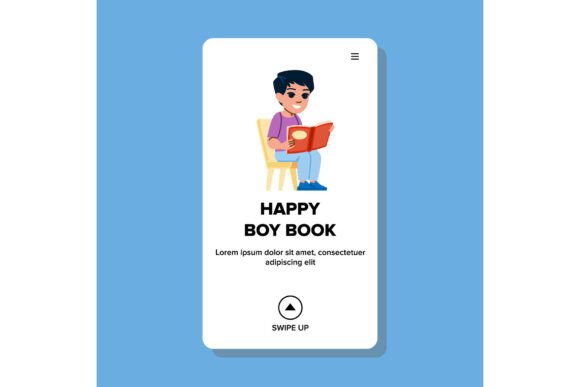
In the vast ecosystem of digital design and educational marketing, few images resonate as universally as the depiction of a student engrossed in reading. The School Happy Book Boy Vector is more than just a simple graphic; it is a visual shorthand for curiosity, academic success, and the joy of discovery. This specific illustration style, often characterized by flat cartoon aesthetics and vibrant colors, has become a staple for educators, publishers, and web designers aiming to communicate the value of literacy instantly. When paired with elements like a friendly portrait dog or other school-related motifs, these vectors create a narrative that transcends language barriers, making them an essential tool in modern visual communication.
The Anatomy of an Educational Icon
To understand why this specific imagery works so well, one must look at its construction. A high-quality School happy book boy vector relies on the principles of flat design. Unlike complex photorealistic renderings, flat illustrations strip away unnecessary shadows, gradients, and textures, focusing instead on bold shapes and clear lines. This simplicity is not a lack of detail but a strategic choice to ensure scalability and clarity across various mediums, from a tiny mobile app icon to a massive billboard advertisement.
The central figure, the boy, is typically depicted with exaggerated expressions of happiness or concentration. His posture often leans forward, signaling engagement. The book he holds is usually open, symbolizing accessibility and the active process of learning. In many variations, a portrait dog school happy book boy element is introduced. The inclusion of a pet, such as a cheerful dog sitting beside the student, adds a layer of warmth and companionship. It suggests that learning is a safe, supportive environment where friends—human and animal alike—are present. This combination creates a holistic scene of children education that feels inviting rather than intimidating.
Color Psychology in Student Illustrations
The color palette used in these web flat cartoon illustrations plays a critical role in their effectiveness. Designers often utilize primary and secondary colors that are bright yet harmonious. Blue might represent trust and intelligence, while yellow signifies optimism and energy. Red can highlight excitement or importance. When creating a School Happy Book Boy Vector, the goal is to evoke a positive emotional response immediately. The human brain processes images faster than text, and a well-composed vector image can convey the message of "learning is fun" in milliseconds. This immediate recognition is vital in a digital landscape where attention spans are short and competition for visibility is fierce.
Applications Across Digital and Print Media
The versatility of the student read theme makes it applicable across a wide spectrum of industries. For educational institutions, these graphics are foundational assets. They appear on school websites, newsletters, and social media campaigns designed to attract new students or celebrate academic achievements. The clean lines of a school happy book boy vector ensure that the image remains crisp whether printed on a brochure or displayed on a 4K monitor.
In the publishing industry, authors and illustrators use similar motifs for book covers, especially those targeting young readers. The image of a child happily reading serves as a meta-commentary, encouraging potential buyers to imagine themselves or their children in that same state of enjoyment. Furthermore, ed-tech companies leverage these visuals for user interface (UI) design. Within an application designed to teach math or reading, a character who looks approachable and happy can reduce anxiety and increase user retention. The presence of a portrait dog school happy book boy motif in an app's loading screen or success animation can provide a comforting sense of familiarity for young users navigating a digital space.
Web Design and User Experience
When implementing these assets into web design, performance is a key consideration. Because vectors are resolution-independent, they do not suffer from pixelation when zoomed in or viewed on high-density screens. This technical advantage aligns perfectly with the needs of modern responsive web design. A web flat cartoon illustration of a student reading can be scaled down for a sidebar widget or expanded to fill a hero section without losing quality. Additionally, vector files are generally smaller in file size compared to raster images, leading to faster page load times—a crucial factor for search engine optimization and overall user experience.
The Role of Companionship in Educational Imagery
A distinctive trend in recent years is the integration of animals into educational scenarios. The concept of a portrait dog school happy book boy is particularly effective because it taps into the deep psychological connection humans have with pets. Dogs are universally recognized as symbols of loyalty, friendship, and unconditional support. Placing a dog next to a reading student subtly communicates that the learning journey does not have to be solitary. It implies a supportive community and a nurturing environment.
This imagery is especially powerful in contexts aimed at early childhood development. For parents choosing a daycare or preschool, seeing a happy child accompanied by a friendly animal can alleviate concerns about separation anxiety or a cold institutional atmosphere. It humanizes the educational setting. From a design perspective, the dog also serves as a compositional anchor, balancing the visual weight of the boy and the book. The interaction between the two characters creates a focal point that draws the viewer's eye into the center of the illustration, enhancing engagement.
Narrative Potential in Static Images
Even though a vector illustration is static, it possesses significant narrative potential. A single image of a School Happy Book Boy Vector can tell a story about a quiet afternoon, a moment of discovery, or the comfort of a favorite storybook. Designers often play with context to change the narrative slightly. Adding a backpack might suggest the start of a school day, while a lamp could imply evening study. The addition of a portrait dog school happy book boy element shifts the focus toward companionship and home learning. These subtle cues allow creators to tailor the message to specific audiences without needing to redraw the entire composition.
Strategic Considerations for Creators and Businesses
For business owners and marketers looking to utilize these types of illustrations, there are several strategic considerations to keep in mind. First is authenticity. While the style is stylized and cartoonish, the emotions conveyed must feel genuine. A forced smile or an awkward pose can break the immersion and make the brand seem insincere. High-quality children education vectors should depict natural body language and relatable scenarios.
Secondly, inclusivity is becoming increasingly important. Modern audiences expect to see diversity in representation. When sourcing or creating a School Happy Book Boy Vector, it is beneficial to consider variations that reflect different ethnicities, abilities, and styles. This ensures that the imagery resonates with a broader demographic and demonstrates a commitment to equality and representation. The core message of joy in learning should be accessible to everyone, regardless of background.
Customization and Brand Alignment
Another critical aspect is brand alignment. A generic stock image may suffice for some uses, but for established brands, customizing the web flat cartoon illustration to match corporate colors and style guides is often necessary. The boy's uniform, the color of the book cover, or the breed of the dog in a portrait dog school happy book boy scene can all be adjusted to fit a specific brand identity. This customization ensures that the visual asset feels like an integral part of the brand's voice rather than a disconnected afterthought. It reinforces brand recognition and helps build a cohesive visual language across all touchpoints.
Trends Shaping the Future of Educational Graphics
As we look toward the future, the evolution of the School Happy Book Boy Vector will likely be influenced by advancements in technology and shifting cultural values. One emerging trend is the move towards dynamic and interactive vector art. Instead of a static image, these illustrations may become animated sequences where the boy turns a page or the dog wags its tail, adding a layer of engagement that static images cannot achieve. This interactivity is particularly relevant for digital platforms where user engagement is paramount.
Furthermore, there is a growing emphasis on sustainability and nature in educational themes. Future iterations of these illustrations might incorporate more organic elements, such as plants, trees, or outdoor settings, reflecting a desire to connect learning with the natural world. The student read scenario might shift from a classroom desk to a park bench, emphasizing that learning happens everywhere. The companion animal might evolve from a domesticated dog to a wilder creature, symbolizing exploration and adventure.
The Enduring Value of Simple Storytelling
Despite technological advancements, the core appeal of the school happy book boy vector remains rooted in simple storytelling. Humans are hardwired to respond to stories, and a well-crafted illustration tells a micro-story that connects on an emotional level. Whether it is a teacher planning a lesson, a parent looking for resources, or a developer building an app, the need for clear, positive, and engaging visuals will never diminish. The ability of a single image to convey the essence of children education and the joy of reading makes it a timeless asset in the visual toolkit.
Ultimately, the power of these illustrations lies in their ability to inspire. They remind us that education is not just a chore but a source of happiness and growth. By leveraging the characteristics of the School Happy Book Boy Vector and its companions, creators can craft messages that are not only seen but felt, driving action and fostering a deeper appreciation for the learning process. As the digital world continues to expand, these simple yet profound images will remain a beacon of positivity and potential for learners of all ages.