Mastering Social Emotional Learning Self-Regulat
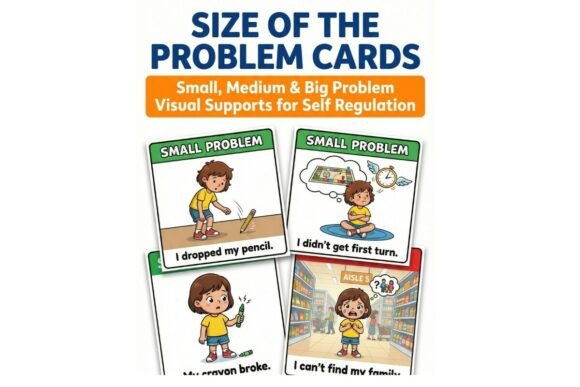
In the dynamic environments of modern classrooms and homes, the ability to manage emotions is often the difference between a productive day and a disruptive one. For educators, parents, and therapists, fostering Social Emotional Learning Self-Regulat skills is not merely an academic goal; it is a foundational necessity for a child's long-term success. One of the most effective ways to teach this complex concept is by breaking it down into tangible, understandable components. Tools like the "Size of the Problem" flash cards offer a practical bridge between abstract emotional concepts and real-world application, helping children identify whether a problem is small, medium, or big and choose the right reaction for each situation.
The Core Challenge: Mismatched Reactions
A common observation in developmental psychology and educational practice is that many children struggle to calibrate their responses to life events. It is frequent to see a student throw a tantrum because a pencil broke (a small problem) while remaining relatively calm when facing a significant bullying incident (a big problem). This disconnect is not usually intentional defiance; rather, it stems from a lack of internal frameworks to assess severity. Without guidance, children often overreact to minor inconveniences or underreact to serious issues, leading to confusion and behavioral challenges.
Social Emotional Learning Self-Regulat addresses this by teaching students to pause and evaluate before acting. The "Size of the Problem" approach provides a clear visual structure that transforms this evaluation process into a concrete skill. By categorizing problems into small, medium, and big, educators can help students label the size of the problem accurately. This labeling is the first critical step in choosing an appropriate reaction, moving the child from a state of reactive emotion to proactive decision-making.
Visualizing Abstract Concepts for Young Minds
For young learners, especially those in special education or autism support classrooms, abstract instructions like "calm down" or "think about your feelings" are often insufficient. These children benefit immensely from visual scaffolding. Printable flash cards featuring real-life problem scenarios serve as this scaffold. When a child sees a picture of a spilled drink next to a picture of a lost pet, the visual contrast helps them understand the hierarchy of problems.
These tools are particularly effective because they turn a moment of crisis into a learning opportunity. Instead of simply correcting behavior, a teacher or parent can use the cards to facilitate a discussion. They can ask, "Is this a small, medium, or big problem?" This simple question prompts the child to engage their flexible thinking and perspective-taking skills. Over time, the external visual aid becomes an internal mental model, allowing the child to self-regulate even when the cards are not present.
Practical Applications Across Educational Settings
The versatility of these resources makes them indispensable across various professional contexts. Whether you are a school counselor designing a curriculum, a speech therapist working on communication goals, or a classroom teacher managing daily routines, the principles of Social Emotional Learning Self-Regulat remain consistent. The specific format of easy-to-cut flash cards ensures that these tools can be integrated seamlessly into existing workflows without requiring extensive preparation time.
- Classroom SEL Lessons: Teachers can use the cards during morning meetings or dedicated social-emotional blocks to introduce new scenarios. This builds a shared vocabulary among students, making it easier to address conflicts as they arise throughout the day.
- Special Education and Autism Support: In these settings, predictability and clarity are paramount. The clear "Small, Medium, Big Problem" visuals provide the consistency needed for students who may struggle with ambiguity. Laminating the cards allows for repeated use in sensory-friendly environments.
- School Counseling and Small Groups: Counselors can utilize the discussion prompts included with the cards to guide deeper conversations about empathy and consequences. Small group discussions allow peers to learn from one another, normalizing the process of problem-solving.
- Behavior Intervention Plans (BIPs): For students with specific behavioral goals, these cards can be directly incorporated into intervention strategies. A BIP might require a student to identify the problem size before receiving a reward or engaging in a calming activity.
Building Independence Through Repetition
The ultimate goal of any Social Emotional Learning Self-Regulat initiative is to build independence. Children should eventually reach a point where they do not need an adult to tell them how to react; they should possess the internal compass to navigate social complexities themselves. The "Size of the Problem" method accelerates this journey by providing a repeatable framework.
When students practice matching reaction size to problem size repeatedly, they develop muscle memory for emotional regulation. They learn that a small problem requires a small reaction—perhaps taking a deep breath or asking for help—while a big problem warrants a bigger response, such as seeking immediate adult assistance or using a safety plan. This differentiation prevents the exhaustion that comes from treating every minor setback as a catastrophe, thereby conserving the child's emotional energy for truly significant challenges.
Enhancing Skills Beyond the Classroom
The benefits of mastering these skills extend far beyond the school walls. Parents and caregivers will find that the strategies learned through these flash cards translate directly to home life. Sibling disputes, disagreements over chores, and reactions to changes in routine can all be managed more effectively when the family shares a common language regarding problem sizes.
Furthermore, these tools support the development of broader cognitive abilities. Flexible thinking is honed as children realize that different situations require different approaches. Social problem solving improves as they consider the perspectives of others involved in a conflict. Perhaps most importantly, self-control strategies become more robust. When a child understands that their reaction does not have to match the intensity of their initial feeling, they gain a sense of agency over their own behavior.
Considerations for Implementation
While these resources are highly effective, successful implementation requires thoughtful consideration. Not every child will grasp the concept immediately. Some students may need additional time to distinguish between a medium and a big problem, or they may initially struggle to apply the concept outside of the structured card activity. Educators and parents should be prepared to model the behavior consistently, narrating their own thought processes when facing problems.
Additionally, it is important to recognize that while visual aids are powerful, they are part of a larger ecosystem of support. Social Emotional Learning Self-Regulat is best achieved when combined with a supportive environment that validates feelings while guiding behaviors. If a child continues to struggle significantly despite using these tools, it may be necessary to consult with specialists to rule out underlying sensory processing issues or other developmental factors. Comparing different resources and adapting them to the specific needs of the individual learner is always a prudent step.
Empowering the Next Generation
Investing in tools that teach children how to identify problem sizes and regulate their responses is an investment in their future resilience. As adults aged 20–50, whether we are professionals, creators, or parents, we understand that the ability to manage stress and navigate social landscapes is crucial for success. By equipping children with these skills early, we are not just preventing disruptions; we are fostering confident, capable individuals who can handle the ups and downs of life with grace.
The "Size of the Problem" flash cards represent a simple yet profound shift in how we approach behavioral education. They move away from punishment-based models toward skill-building frameworks that empower students to take ownership of their actions. As we continue to refine our understanding of Social Emotional Learning Self-Regulat, tools like these will remain essential in our toolkit, ensuring that every child has the opportunity to pause, think, and choose the right path forward.